Why Work Expands to Fill the Time: Understanding and Outsmarting Parkinson’s Law
March 31, 2025 · 3 min read
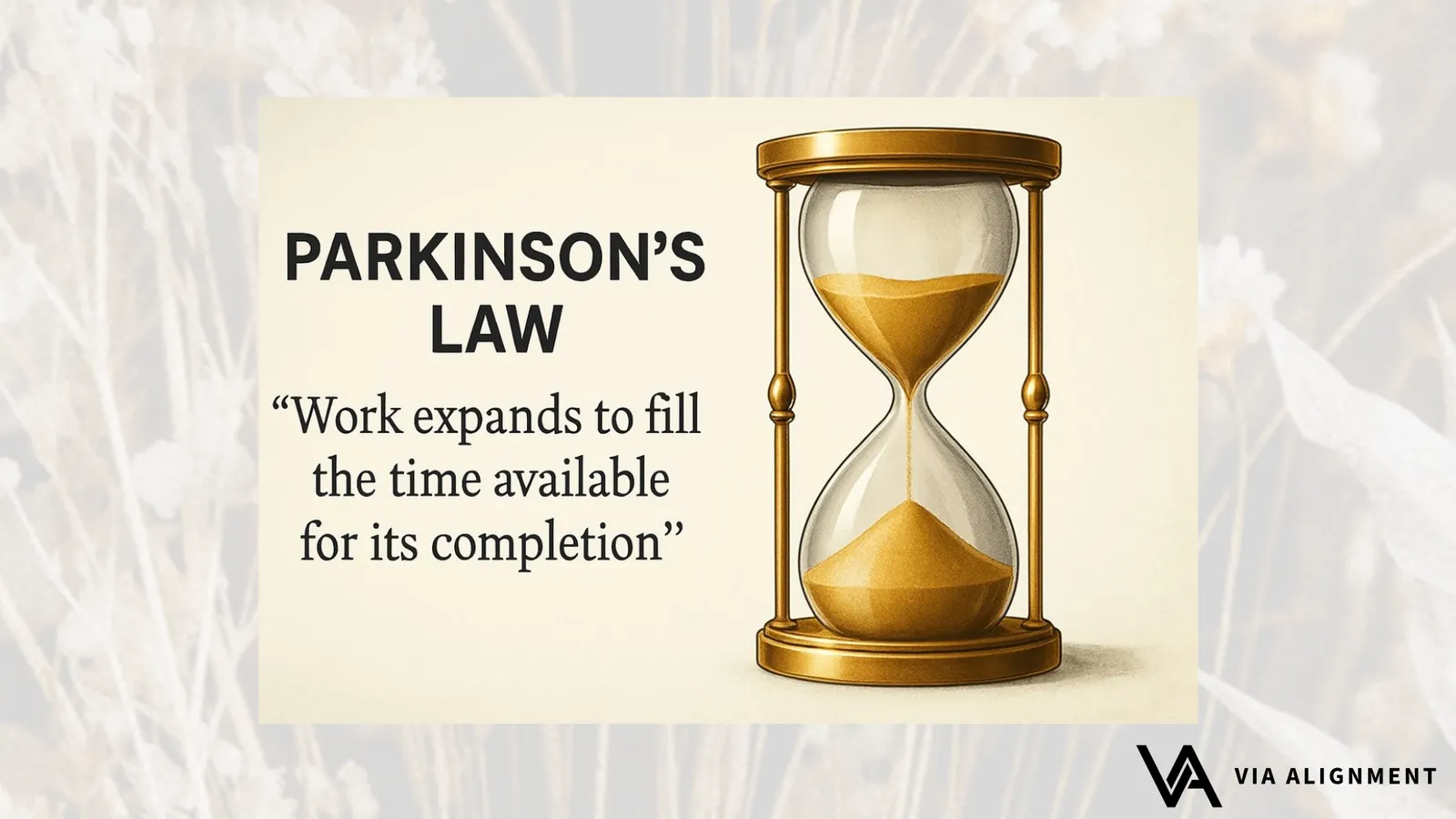
Time management is often a topic in my coaching sessions. There are so many techniques and ways to improve it.
I am a firm believer that awareness always comes first. Once you see something and are aware of it, you get your power back and can take action on the topic.
My life changed when I became aware of Parkinson’s Law. It brought me so much clarity, and I could understand how I operate. With this knowledge, I could intentionally use the law in my favor.
The law says, “Work expands to fill the available time.”. Its origin goes back to 1955 with Cyril Northcote Parkinson. I will not enter into its technical details and background; I will expand on its practical use and impact on our professional lives, productivity, and time management. So you can apply and benefit from it.
A classical example is that if you have a week to complete a presentation, it will take a week. If for the same presentation, you had two days, you would complete it in two days.
If you have a 30-minute meeting with a hard stop, you will cover all you need in this time. However, if you have flexibility and could go longer, the same content may be covered in 45 minutes or one hour.
Pause for a moment and think about it. What are some examples in your life where you are allowing work to expand and fill your time?
We can name it procrastination, perfectionism, lack of clarity, lack of motivation, etc. Regardless of what we name it, we all do, and the consequences may go beyond inefficient use of your time; you may be missing opportunities, overcomplicating simple tasks, and preventing yourself from spending more time with people you love or doing what brings you joy and fulfillment.
Now that you know what it is and its impacts, let’s explore how you can use it to your advantage.
First, recognize where you may be investing more time than needed. Think about your meetings, reports, presentations, emails, etc.
Ask yourself: Where am I giving a task more time than it actually needs? Where may you have unclear deadlines? Where are you doing endless revisions?
Be honest with yourself.
Second, set shorter and realistic deadlines. Now is the time to use it to your advantage. It is essential to give yourself realistic deadlines, as the goal is not to impact quality. Explore the possibilities by focusing on the outcome, not the time spent.
How about using the 15 minutes that you have between meetings to complete an email? How about blocking one hour of focus time to advance your strategic planning? Break it into pieces.
Third, just test it and observe its impact. Learn from the process and customize it to make sense to you and your reality.
Be ready for insights, and let me know how it goes. I would appreciate learning from your experiences.
Originally published on LinkedIn.
Ready to see your next step more clearly?
A clarity call is a focused conversation to understand where you are, what feels unclear, and what next step would create the most meaningful movement.